Is That Video Real? What You Can Prove Before a Deepfake Rule Exists
No rule written for deepfakes is in force, federally or in Colorado. What the evidence rules require today, what NIST and SWGDE expect for a video file, and what a hash can and cannot prove.
On September 15, Colorado’s Chief Justice paused the requirement that criminal proceedings in state trial courts be livestreamed. Her directive lists the harms it is responding to, and one of them should interest anyone who handles evidence: “Posters are editing and manipulating the recordings to distort their content.”
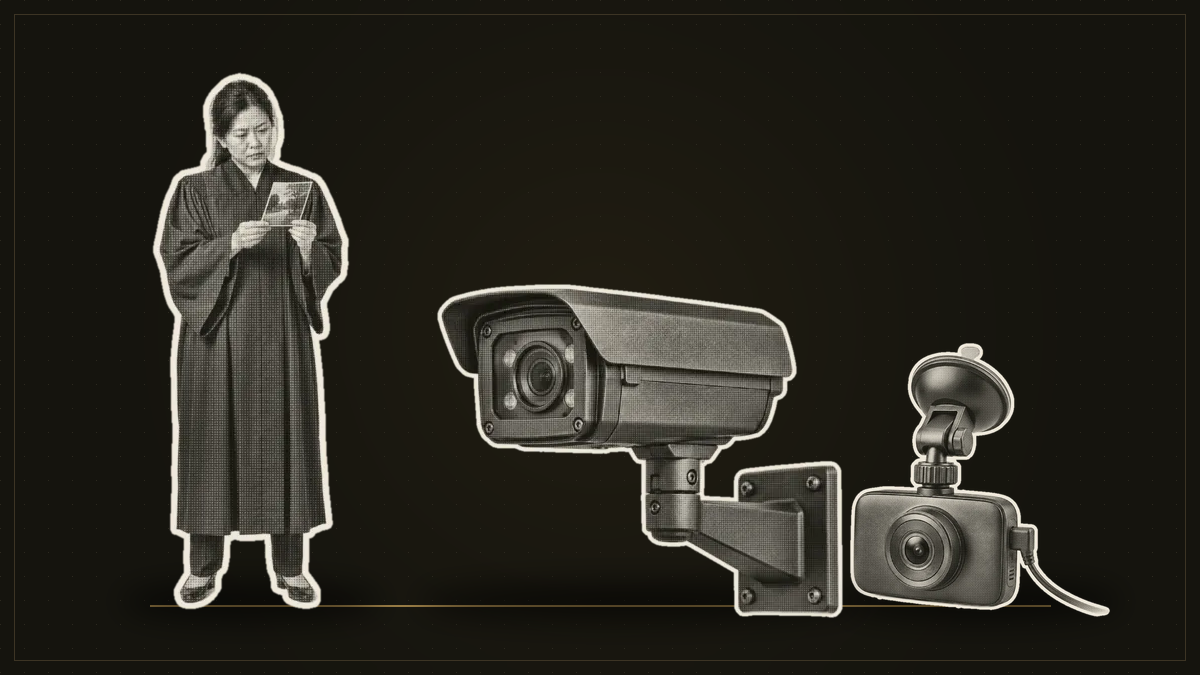
So Colorado’s courts are already seeing altered video of their own hearings. The rules have moved more slowly. As of November 5, 2026, we found no rule written for deepfakes in force, federal or Colorado. A body cam clip, a phone video or a dash cam file still comes in under rules written before generative AI, which makes the record around the file your best answer when someone says it is fake.
What the rules require today
Colorado. CRE 901(a) asks for “evidence sufficient to support a finding that the matter in question is what its proponent claims.” In Gonzales v. People, 2020 CO 71, the Colorado Supreme Court called that standard “minimal” and held that, “[i]n the absence of evidence suggesting that a proffered voice recording has been altered or fabricated,” a proponent may authenticate a recording with that showing. Authenticity then “becomes a question for the factfinder.” The court also recalled its earlier conclusion that authenticating a tape recording “does not require the proponent to establish a chain of custody.”
That surprises people. In Colorado, chain of custody is not by itself an admission requirement for a recording. Our reading is that it matters most in the situation Gonzales sets aside: once there is evidence of alteration or fabrication, the record of where the file has been is what you answer with. Gonzales involved a voicemail, not AI, and we found no Colorado appellate decision setting a chain-of-custody rule for digital video.
Text messages and social media have their own Colorado tests. People v. Heisler, 2017 COA 58 says “authentication of text messages has two components”: a witness with personal knowledge of the content, and testimony establishing the sender. People v. Glover, 2015 COA 16 required two showings for Facebook printouts: that they were Facebook’s records, and that the defendant made the communications.
Federal court. FRE 901(a) sets a similar bar. Rule 902(14) goes further: data copied from a device, storage medium or file can be self-authenticating if verified “by a process of digital identification,” shown by a qualified person’s certification, with notice to the other side. The 2017 committee note explains that such data are “ordinarily authenticated by ‘hash value,’” and that when the values match, “it is highly improbable that the original and copy are not identical.”
The Colorado gap. Colorado has no counterpart. Its Rules of Evidence Committee decided in November 2019 to “table this issue and reconsider in a few years once more cases have come out,” we found no later minutes reopening it, and the January 2025 amendment of CRE 902 still ends at (12). In state court, plan on a witness who can explain the hash and the process, under CRE 901(b)(1) or (b)(9), where a federal practitioner might use a certificate.
The deepfake rule that is not a rule
Federal. The Advisory Committee on Evidence Rules’ October 15, 2026 agenda book describes a new Rule 901(c) it “has prepared, but not finally approved.” A challenger would first present “evidence sufficient to support a finding of fabrication.” If that happens, “the item of evidence is admissible only if the proponent demonstrates to the court that it is more likely than not authentic.” The challenger would also owe reasonable pretrial notice. Draft minutes of the May meeting record that “the DOJ does not believe Rule 901(c) is ready for publication.” The October meeting was set to hear an expert panel, and we found no published outcome yet. The same book reports that the committee voted to withdraw proposed Rule 707 on machine-generated evidence as published and to study a modified version.
Colorado. The Colorado Supreme Court’s Legal Technology Advisory Committee acknowledged in its September 4 minutes that deepfakes “present significant issues” but concluded that “a detailed treatment would be too extensive for the present guideline document.” Discussing whether AI use must be disclosed in legal filings, members noted “the absence of a current Colorado rule generally requiring disclosure of AI use.” Its October 1 agenda set October 29 as the deadline for the final document, after which the court “will likely solicit comments and may set a public hearing.” As of November 5, the committee’s page shows nothing later. The Rules of Evidence Committee’s December 2025 packet circulated the federal Rule 707 material, we found no Colorado proposal on deepfake evidence, and its next meeting is listed for December 4, 2026.
The notice problem. Colorado Justice Maria Berkenkotter raised this at the judicial conference in September, according to Colorado Politics: “If you don’t know that somebody is using it, they aren’t on notice.” That remark is known from the press report only. We found no program or text from the conference on the Judicial Department’s website.
What to do with a video today
Two bodies set the practical benchmark. NIST publishes federal guidance on evidence handling and hashing. SWGDE, the Scientific Working Group on Digital Evidence, publishes best practices for forensic video and image work. They are professional guidance, not law, but they give you a standard to measure a file’s handling against.
1. Keep the original untouched. SWGDE’s Best Practices for Image Authentication (v2.0, March 3, 2025): “The original imagery shall be preserved. Any processing should be applied only to a working copy of the imagery.” Its Best Practices for Digital Evidence Collection (v2.0, November 20, 2025) adds: “A forensic working copy and an archive should be created.”
2. Hash at collection. NIST IR 8387 (September 2022) calls it best practice “to hash evidence as close to collection as possible,” with the hashes stored apart from the file. SHA-256 is one of the algorithms in FIPS 180-4, whose digests “are used to detect whether messages have been changed since the digests were generated.” SWGDE’s Best Practices for Maintaining the Integrity of Imagery (v1.1, March 3, 2025) says: “Hashing should be performed prior to and subsequent to a copy function.”
3. Keep a log someone else could audit. Who received the file, from whom, when, on what device, who touched it afterward, and with what tool and version. SWGDE’s Best Practices for Digital Forensic Video Analysis (v2.0, December 10, 2025) asks for documentation of “the order and settings in which the processes were applied to ensure the integrity and the reproducibility of the results.” If hashing is not possible, “the reason shall be documented.”
4. Establish where it came from and how it was made. For a body cam, a phone or a dash cam, that means the device, the export path, and whether the file was changed along the way. SWGDE’s Best Practices for Digital Video Authentication (v1.2, March 7, 2024) asks: “Has the file been re-encoded?” It also warns: “Metadata cannot be relied upon in isolation and should be used in conjunction with other elements of the file when possible.”
5. Treat every enhanced version as its own item. SWGDE’s integrity document says “any processed imagery should then be considered derivative evidence.” The federal agenda book reports Linkugel v. City of Los Angeles, 2026 WL 1430790 (Cal. App.), where photos modified by generative AI were held inadmissible because the plaintiff had made no showing, “through an expert or otherwise,” that the use was reliable. We are relying on the committee’s summary here and have not read the opinion.
What a hash does not prove
A hash shows that a copy matches the file you collected. It says nothing about whether that file is honest. A deepfake hashed the moment it arrives will verify perfectly from then on.
SWGDE is direct about this. A hash “can verify that a copy of a digital image file is identical to the file from which it was copied, but it cannot demonstrate the veracity of the scene depicted in the image.” On video, its authentication methods “cannot determine if the events depicted within the file are authentic.”
Automated detectors do not close the gap either. NIST AI 100-4 (November 2024) describes “a constant cat-and-mouse game between the detection and generation communities.” A detector score is one input. The proof is still a witness, the file itself and the record around it, taken together.
Where Lawnova fits
Most of the steps above are checking and documentation, and they are easier to defend when they happen on the day the file arrives. Lawnova’s AI-Powered Digital Forensics tool checks a file and helps build that documentation. It analyzes where and how a video was made, whether it came from a body cam, a phone or a dash cam, and its listed features include “Digital Asset Verification,” “Metadata Harvesting & Custody Chain” and “Evidence-Rule Compliant Reporting.” The work stays inside your firm. The examiner and the witness stay yours: a tool can support their testimony, not replace it.
This article is general information current as of November 5, 2026, not legal advice. Rules and committee drafts change, so check the sources linked above before relying on them.
Continue Reading
Lawnova in Law Week Colorado: AI Built Around the Way Your Firm Works
Lawnova's founders and developers talked with Law Week Colorado about AI that adapts to a firm's own workflow, page-and-line verification, local installs and why the attorney keeps command.
The 10th Circuit Bench on AI: Verification, Volume and Hidden Prompts
A week after proposing a rule that makes signers certify human review of AI-assisted filings, 10th Circuit judges explained what worries them: confident but weak analysis, filing volume, and prompt injections hidden in documents.
What Citation Checking Has to Catch: Existence Is Only the First Question
A citation can be real and still be the wrong one. What a citation check has to cover beyond existence.